
20+years Teaching Experience
Trained by doctors and gynaecology consultants, our team teaches in hospitals, medical schools, clinics and sexual assault referral centres around the UK.
We run supportive sessions which focus on effective technical and communication skills, both for new trainees and staff in need of an update or refresher.
We also offer stand-alone sessions in communication skills for intimate exams. These are patient-centred and trauma-informed and designed to help your staff at any stage in their practice.

WHAT WE TEACH
Clear, practical training with real-time feedback
Pelvic examination
Practical small group sessions for technical skill, confidence and patient centred communication.
Breast examination
Supportive technical skills training and patient-centred communication. Builds student confidence.
Communication skills
Teaching for sensitive, clear and respectful communication during intimate examinations.
WHY GTAS
Feedback that plastic models and clinic settings cannot provide
Unlike plastic models, anaesthetised patients and patients in clinics, a GTA can give trainees informed real-time feedback.
GTAs who work in the patient role are trained to teach on their own body.
Sessions consistently receive excellent feedback from students and trainees.
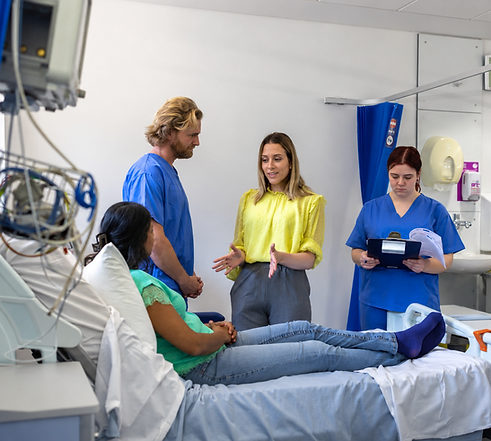
“My clinical partner and I are so grateful to the amazing GTAs who guided us through speculum and bimanual examinations on their own bodies.
As newbies, we were very nervous at the start but the GTAs were patient and kind.
The real-time instructions on effective and gentle technique, plus their tips on sensitive language gave us the competence and confidence I don’t think we could have acquired in any other setting.”
Zara W (and Ahmed H), 4th year medical students
PROGRAMME SUPPORT
Pilot and develop GTA teaching programmes
Medical schools
The team has been involved in setting up programmes in several medical schools in England and Wales.
Forensic Teaching Associates
We also work in the field of sexual assault and are trained and qualified as Forensic Teaching Associates.
UK and EU pilots
Our team can offer demonstration sessions for UK or EU universities considering a pilot GTA programme.